
aaa Carol J. Clover’s “Final Girl”
Originally developed in Carol J. Clover’s essay “Her Body, Himself: Gender in the Slasher Film”, published in Representations 20 (1987), which served as the basis for Chapter 1 of Clover’s 1992 book Man, Women, and Chain Saws: Gender in the Modern Horror Film.
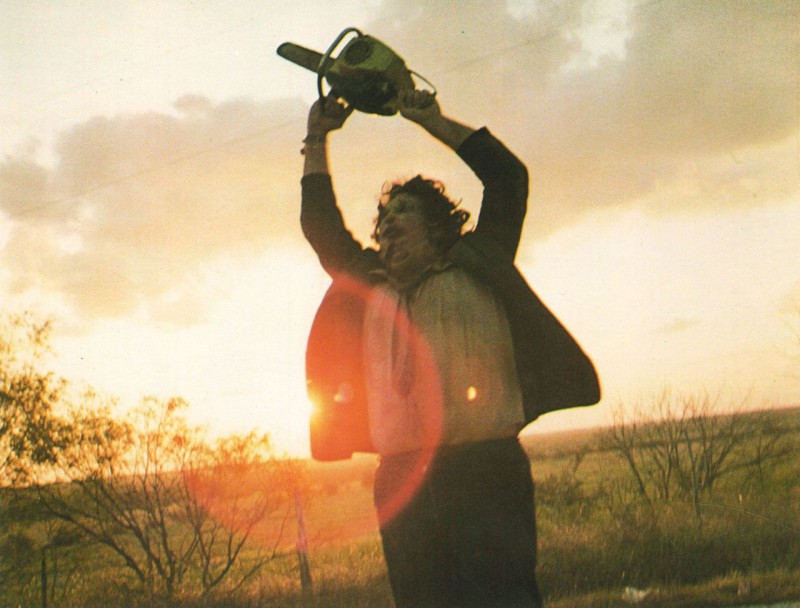 When American film theorist Carol J. Clover ventured into a late ‘80s screening of The Texas Chain Saw Massacre (Tobe Hooper, 1974), it prompted her to question the (by no means neutral value) position of film theory and criticism on “exploitation” (including low-budget and independent horror film), as well as the feminist reading of slasher film as the locus of sadistic identification with the aggressor. In her essay and later book Clover rejects the critique of the bloody genre as mere exploitation of excess and spectacle in the service of profit and prolongation of dominant ideology, along with the feminist notion of the “male gaze” as the agency of the (mostly male) viewer’s identification along gender lines with the (male) killer, and the assumption that this identification “authorizes impulses toward violence in males and encourages impulses toward victimization in females.” She opposes a simplistic reading, which undermines both the complexity of the film text and the audiences’ capacity for empathic (cross-gender) identification. The viewer does not identify solely and exclusively with his or her literal counterpart – the young with the young, the wealthy with the wealthy, men with men and women with women. Clover suggests that the narrative (story, characters) and formal structure (camera angle, point of view) of these films attest to the fact that we all, be it men or women, identify with the victim, who is by and large a woman. Furthermore, a woman in pain and fear. She recognizes in this shift the result and reflection of broader social changes in attitudes toward gender roles and relations, particularly the women’s movement and feminist theory.
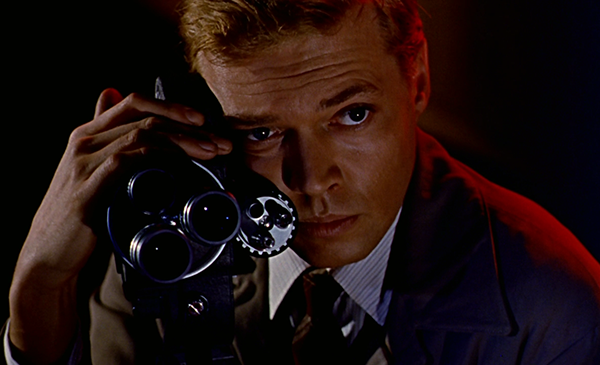 But what exactly is this crucial shift that Clover detects most clearly in the horror genre, particularly the slasher film? In 1960, the central characters of Hitchcock’s Psycho and Powell’s Peeping Tom, two supreme proto-slashers*, are still male killers, Norman Bates and Mark Lewis, while the story of the film revolves around the disclosure of their psychotic personalities. With the introduction of the Final Girl figure, the modern slasher radically transforms this formula. A “detective plot, revolving around a revelation, yields in the modern slasher film to a hero plot, revolving around the main character’s struggle with and eventual triumph over evil.” And there is more. The viewer’s and the camera’s attention tips decisively on the side of the female victim-hero, who thus becomes the central figure, and her fight for survival the storyline’s focus. If initially, the Final Girl still requires intervention on the part a masculine saviour, the cinematic equivalent of Little Red Riding Hood’s chevalier woodsman, usually a lawman, a detective, sheriff or Texas Ranger, in the latter slashers she becomes her own saviour, the victim turned hero. “Given the drift in just the four years between Texas Chain Saw and Halloween – from passive to active defence – it is no surprise that the films following Halloween present Final Girls who not only fight back but do so with ferocity and even kill the killer on their own, without help from the outside.” While the “comic ineptitude and failure of would-be ‘woodsmen’ is a repeated theme in the later slasher films,” the Final Girl, on the contrary, becomes more and more skilful and supernaturally effective. In the last shot of The Texas Chainsaw Massacre 2 (1986), it is her, Stretch, who triumphantly wields a chainsaw above her head, while the Texas Ranger, who comes to her rescue, fails to save even himself.
The victim as typically female figure, has a long and enduring folkloric pedigree. If within horror cinema “the killer has over time been variously figured as shark, fog, gorilla, birds, and slime, the victim is eternally and prototypically the damsel. Cinema hardly invented the pattern. It has simply given visual expression to the abiding proposition that, in Poe’s famous formulation, the death of a beautiful woman is the ‘most poetical topic in the world.’ As horror director Dario Argento puts it, ‘I like women, especially beautiful ones. If they have a good face and figure, I would much prefer to watch them being murdered than an ugly girl or man.’ … Or Hitchcock, during the filming of The Birds: ‘I always believe in following the advice of the playwright Sardou. He said, ‘Torture the women!’ The trouble today is that we don’t torture women enough.’” But as we have seen, in the cinematic torture post-1974, Clover detects a general shift from the male-centred point of view to the central position of the female victim. Who in the course of the film, through a long and difficult struggle, becomes the victim-hero, her heroism always implying a certain degree of monstrosity as “… victims, in the process of combating monsters, become themselves monstrous.” “Innocence too is an artifact of civilization, a middle-class luxury the moral equivalent of insurance,” writes Clover, illustrating her point via John Boorman’s Deliverance (1972), the male version of the rape-revenge scenario, in which “good men”, honest husbands, fathers, and workers, venture on a journey to eventually become liars and murderers. It is no different for the heroines of I Spit on Your Grave (1978), What Ever Happened to Baby Jane? (1962) or Attack of the 50 Foot Woman (1958) – they set out as “good women”, modest sisters, diligent writers, and loyal wives, only to end up as liars, murderers and fifty foot monsters.
 Of course, the matter is much more complex than it might seem. Clover constantly reminds us that gender notions are historically overdetermined, that gender “is less a wall than a permeable membrane,” and that “sex, in this universe, proceeds from gender, not the other way around. A figure does not cry and cower because she is a woman; she is a woman because she cries and cowers. And a figure is not a psychokiller because he is a man; he is a man because he is a psychokiller.” As Clover soberly concludes, the discourse of slasher films is still significantly masculine. “To applaud the Final Girl as a feminist development, as some reviews of Aliens have done with Ripley, is, in light of her figurative meaning, a particularly grotesque expression of wishful thinking.” Since in addition to the victim function, the Final Girl must now take up also the (traditionally male) hero role, she runs into a paradox: “She is a physical female and a characterological androgyne.” She is the Girl Scout, the bookworm, the mechanic. The first to recognize signs of danger, which her friends carelessly ignore. She is intelligent, effective in a time of crisis, and although she is physically no match for the killer, she confronts him with gusto. “The Final Girl is boyish, in a word. … Lest we miss the point, it is spelled out in her name: Stevie, Marti, Terry, Laurie, Stretch, Will, Joey, Max. Not only the conception of the hero in Alien and Aliens but also the surname by which she is called, Ripley, owes a clear debt to slasher tradition. … At the level of the cinematic apparatus, her unfemininity is signalled clearly by her exercise of the ‘active investigating gaze’ normally reserved for males and punished in females when they assume it themselves; tentatively at first and then aggressively, the Final Girl looks for the killer, even tracking him to his forest hut or his underground labyrinth, and then at him, therewith bringing him, often for the first time, into our vision as well.” She is the one who lingers in our memory. “She alone looks death in the face, but she alone also finds the strength either to stay the killer long enough to be rescued (ending A) or to kill him herself (ending B). But in either case, from 1974 on, the survivor figure has been female.” The only thing to be added is that the Final Girl certainly lives longest, but not always survives.
Clover records a similar shift in the rape-revenge subgenre, and finds clear parallels between the figure of the self-saving Final Girl and the self-avenging rape victim. “The representation of rape has undergone a striking evolution since the early seventies. Frenzy and Straw Dogs are for all practical purposes the last of the ‘old style’ rape films – films in which the rape is construed as itself an act of revenge on the part of a male who has suffered at the hands of the woman in question (to have been sexually teased, or to have a smaller paycheck or lesser job, is to suffer) and in which the viewer is invited by the usual narrative and cinematic conventions to adopt the rapist’s point of view.” Subsequent films, such as I Spit on Your Grave, flip this proposition on its head, and although their premise is not without precedent, these films do reflect significant changes in the social perception of rape taking place from late ’50s to ‘70s. The redefinition of rape as a crime on par with murder is a late historical development. But it was followed immediately by the idea “that rape deserves full-scale revenge; that a rape-and-revenge story constitutes sufficient drama for a feature film and that having the victim survive to be her own avenger makes that drama even better.” In the rape-revenge film “it is not just triumphant self-rescue in the final moments of the film that the woman achieves, but calculated, lengthy, and violent revenge of a sort that would do Rambo proud. (Paradoxically, it is the experience of being brutally raped that makes a ‘man’ of a woman.)” Like the defence against the slasher killer, the rape of the rape-revenge plot becomes a problem for women themselves to solve – victims at first, turned monstrous heroines of vengeance and self-defence.
Maša Peče
* To be sure, film theory and criticism label these films quite differently, as Clover says: “Production values, not just subject matter, play a role in the perception of genre. High-budget forms are likely to be categorized as drama, suspense, or action and low-budget forms as horror or cult – even when the plots are virtually identical.”